

Seeing “Disposition Pending” on a court notice can feel like a riddle. What does it actually mean for your case?
In the simplest terms, it means your legal case is still open and active. A final decision has not been made yet. Think of it like a TV series that just ended on a cliffhanger—the story isn’t over, and the outcome is still up in the air.
What Does Disposition Pending Mean, Exactly?

When you see “Disposition Pending” on your court record, don’t panic. It isn’t a guilty verdict or a sign that something has gone wrong with your case.
It’s just a standard administrative label the Michigan court system uses to show the legal process is still unfolding. Your case has been filed, initial steps like an arraignment have probably happened, but the final chapter hasn’t been written.
What This Status Means for You
While seeing this status can be stressful, it’s a completely normal part of the legal journey. It just confirms your case is moving through the necessary phases.
During this time, a lot of critical work might be happening behind the scenes:
- Evidence Review: Your attorney and the prosecutor are busy exchanging and analyzing evidence.
- Negotiations: This is often when plea agreements or other potential resolutions are being discussed.
- Court Proceedings: The court might be scheduling future hearings or waiting for motions to be filed and argued.
Essentially, that “pending” label just shows that the gears of justice are turning. This waiting period is often when your legal team does its most important work to build a strong defense strategy for you. Understanding what happens at a first appearance in court can give you a better idea of how this whole process gets started.
A “Disposition Pending” status is a signal of process, not a final judgment. It represents the time between the start of your case and its ultimate conclusion, whether that’s a dismissal, a plea, or a trial verdict.
To help you get a better handle on the different terms you might see, we’ve put together a quick guide to common Michigan case statuses.
Michigan Case Status At-a-Glance
This table is a quick guide to understanding the common terms you might see on your Michigan court record as your case moves forward.
| Case Status | What It Means | Is the Case Over? |
|---|---|---|
| Open / Filed | The case has just been officially started with the court. | No, it’s just begun. |
| Disposition Pending | The case is active, and the court is waiting for the final outcome. | No, it’s in progress. |
| Adjudicated | A judge has made a final decision (e.g., guilty, not guilty, dismissed). | Yes, the decision is made. |
| Sentenced | The punishment or penalty has been officially ordered by the court. | Yes, for this stage. |
| Closed / Disposed | All legal actions are complete, and the case is officially finished. | Yes, it’s officially over. |
As you can see, “Disposition Pending” is just one step on a longer path. Your lawyer can give you the most accurate update on where you are in that process and what to expect next.
How a Pending Case Messes With Your Daily Life
While your case sits in this legal limbo, the real-world consequences can hit you hard and fast. A “Disposition Pending” status isn’t just some technical term in a court file—it creates real, tangible roadblocks in your day-to-day life, especially when it comes to your job and where you live.
Think about it. When you apply for a job, try to rent an apartment, or even get a professional license, a background check is almost always part of the deal. An active, unresolved case will pop right up on that report, and for most decision-makers, that’s a huge red flag. They don’t see the full story; they see an unresolved legal problem, which often looks like a risk they aren’t willing to take, no matter what the law says about being innocent until proven guilty.
Employment and Background Checks
Finding or just keeping a job becomes a massive headache with a pending case hanging over you. Many employers simply won’t take the chance on hiring someone with an unresolved legal issue. In fact, research shows that approximately 60-65% of employers will pass on a candidate with a pending criminal disposition. They see it as an unknown risk, and your presumption of innocence gets lost in the shuffle. This means your case can slam the door on your ability to earn a living long before a judge or jury ever makes a final decision. To see how employers view this, you can learn more about how dispositions impact hiring decisions on scoutlogicscreening.com.
And this uncertainty doesn’t stop at job hunting. It can also throw a wrench in your plans for:
- Professional Licenses: Getting or renewing a license for careers like nursing, teaching, or skilled trades can be held up or even denied.
- Housing Applications: Landlords are running background checks more than ever. Many will reject applicants with pending cases outright, worried about potential liability or problems down the road.
- Educational Opportunities: Believe it or not, some college programs or even financial aid applications can be negatively impacted by an unresolved criminal matter.
Daily Freedom and Personal Life
Beyond the background checks, a pending case often comes with a set of strict rules that can seriously cramp your style and limit your personal freedom. When you’re released on bail, the court sets conditions you have to live by until the whole thing is over.
The “Disposition Pending” phase isn’t a passive waiting game. It’s an active period where your personal and professional life is under a microscope, hemmed in by the court’s ongoing requirements.
In Southwest Michigan courts, some of the most common bail conditions include:
- Travel Restrictions: You might be forbidden from leaving the state—or even the county—without getting a judge’s permission first.
- No-Contact Orders: In cases involving another person, you’ll be ordered to have absolutely zero contact with them. This gets incredibly complicated if that person is a family member, a coworker, or someone you live with.
- Regular Check-ins: You could be required to report to a probation officer on a regular basis.
- Substance Abstinence: For OWI (drunk driving) or drug-related charges, you’ll almost certainly be ordered to stay away from alcohol and drugs, and they’ll verify it with random testing.
Messing up and violating any of these conditions is a big deal. It can get your bail revoked, landing you right back in jail to wait for your case to be resolved from a cell. On top of that, the stress of the legal troubles can put a huge strain on personal relationships and complicate sensitive family court issues, like child custody battles. Understanding just how much this “waiting period” can impact your life makes it crystal clear why you need a solid, proactive legal strategy from day one.
Common Reasons Your Case Is Still Pending
It’s completely natural to feel frustrated and wonder why your case is dragging on. The good news is that seeing “disposition pending” isn’t usually a sign that something’s wrong. More often than not, it means the necessary legal gears are turning, just as they should.
A Michigan criminal case has a lot of built-in steps, and most of them simply take time.
Often, the wait comes down to things nobody can control. Courts in busy Southwest Michigan jurisdictions like Kalamazoo or Kent County have incredibly packed dockets. Judges and prosecutors are juggling hundreds of cases at once, so just getting a hearing scheduled can take weeks or even months.
The Investigation and Discovery Phases
Another common reason for the delay is that the investigation is still live. Even after you’ve been charged, the police might still be gathering evidence, tracking down witnesses to interview, or waiting for a lab to process things like blood tests or DNA analysis. This is a critical part of building a case.
At the same time, your case moves into what’s called the discovery phase. This is the formal process where the prosecutor has to turn over all their evidence to your attorney. It’s not a quick handoff—it involves your lawyer meticulously combing through every police report, dashcam video, and witness statement to find weaknesses and build your defense.
The following infographic shows how the consequences of a pending case can spill over from your job into other critical areas of your life.
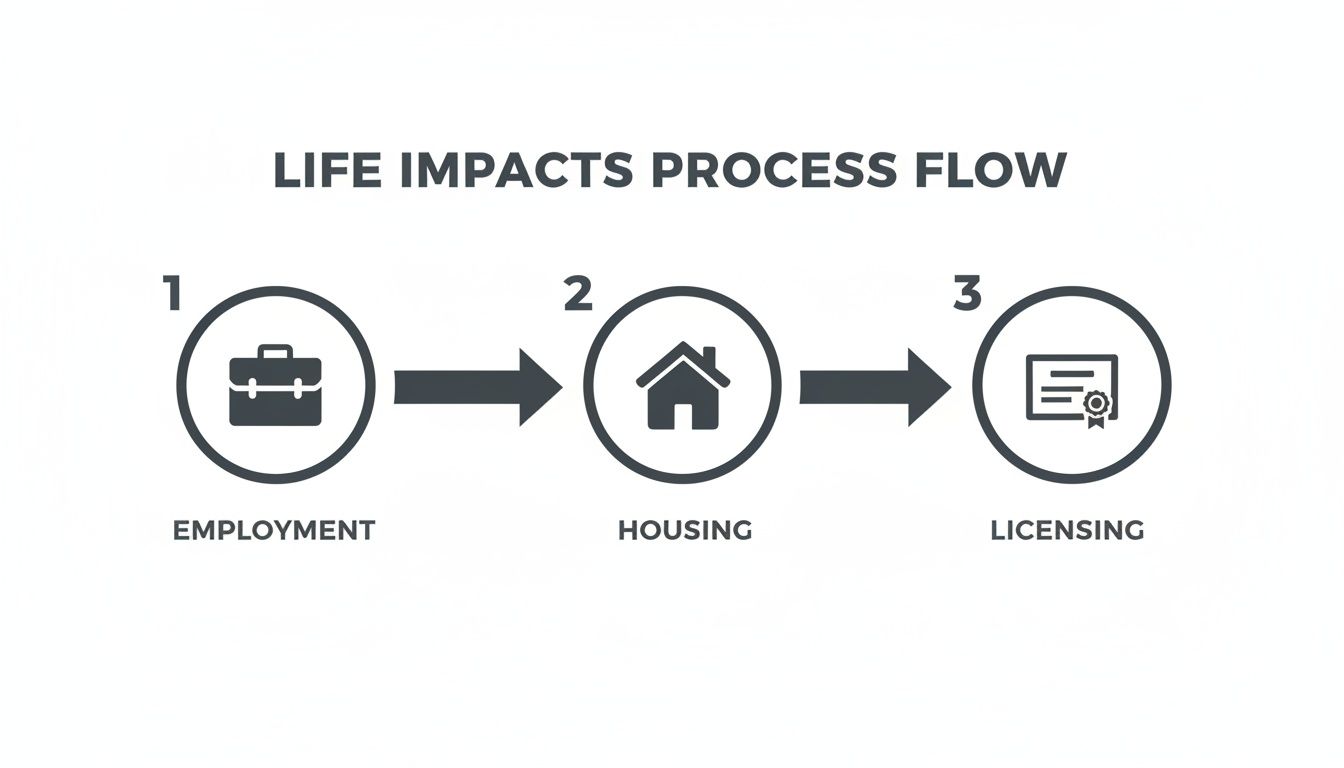
As you can see, a pending case can create a domino effect. An issue with employment can make it harder to secure housing or keep a professional license in good standing.
Strategic Legal Maneuvers
Finally, a huge part of the waiting period is your defense team actively working behind the scenes. A good attorney doesn’t just sit back and wait for a court date to appear on the calendar.
The time your case is pending is often when the most important strategic work gets done. It’s an active period of negotiation and preparation aimed at securing the best possible outcome for you.
This proactive defense work includes several time-consuming but essential steps:
- Filing Pre-Trial Motions: Your lawyer might file motions to challenge how evidence was collected by police or to argue that certain evidence should be thrown out and excluded from trial.
- Negotiating with the Prosecutor: There’s a constant back-and-forth between your attorney and the prosecutor. The goal here is to get the charges reduced or work out a favorable plea agreement that avoids the risk of a trial altogether.
- Preparing for Hearings: Key events, like a preliminary examination in a felony case, require a ton of preparation. You can learn more about this specific step in our guide on how long a preliminary hearing takes.
Each of these moves is a deliberate strategy designed to protect your rights and strengthen your position. So, while the wait is definitely hard, it’s often a sign that your case is getting the careful, diligent defense it deserves.
Exploring the Potential Outcomes for Your Case

The “Disposition Pending” phase is just a temporary stop on your legal journey. Eventually, your case will reach a final resolution, and understanding the possible destinations is key to managing your expectations.
This is also where a skilled attorney can make a real difference. Each path has a vastly different impact on your future, so let’s walk through the most common outcomes you might face in a Michigan criminal or traffic case.
Case Dismissal or Acquittal
The best possible outcome is a complete dismissal of the charges or an acquittal after a trial. A dismissal means the prosecutor has decided to drop the case entirely. This often happens because of a lack of evidence or due to effective pre-trial motions filed by your defense attorney.
An acquittal, on the other hand, means you went to trial and were found not guilty.
Both results mean you are legally cleared of the charges. While the arrest might still appear on your record at first, these outcomes are the critical first step toward clearing your name completely. You can learn more about the specific signs your case might be dismissed in Michigan in our detailed guide.
An outright dismissal is the goal in many cases. It is often achieved not in a dramatic courtroom scene, but through careful, behind-the-scenes legal work that dismantles the prosecution’s case before it ever gets to a jury.
Plea Agreements and Convictions
The reality is that the vast majority of criminal cases—over 90%—are resolved through plea agreements, not trials. A plea agreement is a negotiated deal where you agree to plead guilty, usually to a lesser charge or in exchange for a more lenient sentence.
This can be a strategic choice to avoid the risk and uncertainty of a trial. However, a plea agreement still results in a conviction on your record, which carries consequences for employment, housing, and professional licenses. A conviction can also result from being found guilty at trial.
Special Programs and Deferred Dispositions
Michigan offers several outstanding programs that can lead to a dismissal even if you accept responsibility. These are fantastic options for first-time offenders or those who meet specific criteria.
- HYTA (Holmes Youthful Trainee Act): Available for individuals aged 18 to 25, this program allows a conviction to be kept off your public record if you successfully complete probation.
- 7411 Deferral: This is a deferral program specifically for first-time drug possession offenses. Completing probation leads to the case being dismissed without a public conviction.
- Domestic Violence Deferral: First-time offenders in domestic violence cases may also be eligible for a deferral program that results in a dismissal after probation.
These programs aren’t handed out automatically; your attorney must effectively advocate for your eligibility. Successfully navigating one of these paths means the answer to “What does disposition pending mean?” for you could be a second chance with a clean public record.
The table below breaks down what each of these potential outcomes really means for your criminal record.
Possible Case Outcomes and Their Impact
Understanding how your Michigan criminal case could be resolved and what it means for your future.
| Outcome | Description | Impact on Your Criminal Record |
|---|---|---|
| Dismissal/Acquittal | The prosecutor drops the charges, or you are found not guilty at trial. | No conviction. The arrest record may remain but can often be expunged. |
| Plea Agreement | You plead guilty, often to a reduced charge, in a deal with the prosecutor. | Results in a conviction for the charge you pleaded to. This is permanent unless expunged. |
| Conviction at Trial | You are found guilty by a judge or jury after a trial. | Results in a permanent conviction on your record, which can only be removed via expungement. |
| Deferred Disposition | You complete a program (like HYTA or 7411), and the case is then dismissed. | No public conviction appears on your record if you successfully complete the program’s terms. |
Ultimately, the goal is to steer your case toward the best possible column in that table. A “Disposition Pending” status is your window of opportunity to build a strategy that protects your future.
What You Should Do While Your Case Is Pending

It’s completely normal to feel like you’re in limbo when your case status is “disposition pending.” But this waiting period isn’t a passive game. There are concrete, proactive steps you can take right now to protect your rights and significantly strengthen your defense.
The single most important move is to partner with an experienced criminal defense attorney immediately. A lawyer who knows the local Southwest Michigan courts can interpret what’s happening, explain the specific procedures for that courthouse, and start building your defense strategy from day one.
Follow Court Orders Meticulously
Once you’re released on bail, the court will set specific conditions you must live by. Following these rules to the letter isn’t optional—it’s absolutely critical to staying out of jail while your case is resolved.
Any violation, no matter how small it seems, can have severe consequences. A missed check-in with your probation officer or a failed alcohol test could lead to the judge revoking your bail. If that happens, you’ll be sitting in jail waiting for the final outcome of your case.
Common bail and bond conditions you must follow include:
- No-Contact Orders: You have to avoid all communication with certain people, which can be tough if it involves family or coworkers.
- Abstaining from Substances: If your case involves drugs or alcohol, you will almost certainly be ordered to stay clean and submit to random testing.
- Travel Restrictions: You may be required to stay within the state or even the county unless you get explicit permission from the court to leave.
Protect Your Case and Yourself
Beyond just following court orders, you need to be strategic about what you do and say. Everything you do during this time can directly impact how your case ends.
The most damaging evidence against a person is often their own words. During the pending phase, silence is your strongest shield. Assume everything you say or write can be found and used against you.
To safeguard your case, make these practices non-negotiable:
- Stop All Discussion: Do not talk about your case with anyone except your attorney. This includes friends, family, and coworkers. You have no legal privilege with them, meaning they could be forced to testify against you.
- Stay Off Social Media: Deactivate your accounts or at least stop posting. Prosecutors and police actively search social media for comments, photos, or check-ins that can contradict your defense or just make you look bad.
- Gather Your Documents: Collect every piece of paper related to your case—bail paperwork, tickets, court notices—and give copies to your lawyer.
Your best strategy is to maintain open communication with your legal counsel while staying patient. Following this guidance empowers you to get through this uncertain time as effectively as possible.
Common Questions About Pending Dispositions
When you’re dealing with the court system, it often feels like you need a translator for all the legal jargon. “Disposition pending” is one of those confusing terms that shows up a lot. To cut through the noise, I’ve put together some straight answers to the questions I hear most often from clients who see this on their case file.
Think of this as your practical guide to what that status actually means for you here in Southwest Michigan.
How Long Will My Case Say “Disposition Pending”?
This is the million-dollar question, and the honest answer is: it depends. The waiting game is one of the hardest parts of having a pending case, and unfortunately, there’s no set timeline. Every case moves at its own speed, influenced by its own unique facts and the court it’s in.
For instance, a simple misdemeanor traffic ticket in a smaller court like Cass County might only be pending for a few weeks or a couple of months. But if you’re facing a serious felony in a busy court like Kalamazoo, your case could easily stay in this “pending” phase for many months—sometimes even over a year.
So, what causes the delay? It usually comes down to a few key things:
- Case Complexity: A straightforward case with one or two witnesses will resolve much faster than a felony that requires digging through tons of evidence and filing pre-trial motions.
- Court Calendars: Busy courts in bigger cities are just plain backlogged. It can take a long time simply to get a hearing date on the judge’s calendar.
- The Discovery Phase: This is the formal process where my office and the prosecutor exchange all the evidence. If we’re waiting on things like lab reports or expert opinions, this can really stretch out the timeline.
- Plea Negotiations: The back-and-forth discussions to try and work out a favorable deal don’t happen overnight.
While nobody can give you a crystal-ball date, an experienced local attorney who knows the ins and outs of that specific courthouse and prosecutor’s office can give you the most realistic estimate.
Can I Get My Driver’s License Back While My OWI Case Is Pending?
This is a huge concern for anyone charged with drunk driving in Michigan, and the answer is almost always no. It’s critical to understand that an OWI arrest kicks off two separate legal processes that attack your license.
First, there’s the administrative license suspension from the Michigan Secretary of State. This happens automatically right after your arrest, especially if you refused a breathalyzer or had a high BAC. You only have a tiny window—usually just 14 days—to challenge this administrative action. If you miss that deadline, the suspension sticks.
The second process is your criminal case in court. The final outcome of that case will decide if you face any more court-ordered suspensions. But because that administrative suspension hits first and is a separate issue, your license is almost certain to remain suspended while the criminal case has a “disposition pending” status.
In Michigan OWI cases, the Secretary of State often suspends your license immediately, long before a judge ever makes a final decision. If you don’t act fast, you could lose your chance to fight that initial suspension.
This is why calling an attorney immediately is so important. We have to fight both battles—the administrative one and the criminal one—to protect your ability to drive.
Does “Disposition Pending” Mean the Prosecutor Is Still Deciding Whether to Charge Me?
This is a really common misconception, but the answer is no. If your case officially has a “Disposition Pending” status on the court docket, it means charges have already been filed. You are officially in the system.
The “pending” part refers to the final outcome of the court case itself, not the prosecutor’s decision to charge you. That initial review stage, where the prosecutor is looking at police reports to decide if they’ll file a case, is usually called being “under review” or “awaiting warrant.”
Once you see “Disposition Pending,” it’s a sure sign that the legal process has begun, and you need a solid defense strategy.
Will a “Pending Disposition” Entry Go Away if My Case Is Dismissed?
Getting your case dismissed is the goal, but it doesn’t mean the record of it magically disappears. When a case is thrown out, the court record is updated to show a final disposition of “Dismissed.” However, the public record of your arrest and the original charge doesn’t just vanish.
That information can still pop up on detailed background checks, which could cause problems for you down the road.
To truly wipe the slate clean, you have to go through a separate legal process called expungement. A dismissal is the critical first step that makes you eligible for an expungement, but it’s not automatic. You’ll need to work with an attorney to file the right paperwork to get the arrest, the charge, and the dismissal completely sealed from public view.
If you’re looking at a pending criminal or traffic case in Southwest Michigan, you don’t have to face this uncertainty on your own. At David G. Moore, Attorney at Law, our team knows the local courts inside and out. We’re here to build the strongest defense possible to protect your record and your future. Contact us today for a consultation to talk about your case.


